*** VISIT MATTVEASEY.COM FOR NEW ITEMS ***
Showing posts with label Harry Kalas. Show all posts

Thursday, November 29, 2018

Philography: Richie Ashburn

Ashburn was a part of the Phillies organization
for 47 years as a player and broadcaster
Four years ago, I began writing a series of Philadelphia Phillies mini-biographies. The series was inspired by my twin interests in the Phillies ball club and the subject of history in general.
What I decided to call my “Philography” series was never meant to present a comprehensive life story on each player. I just wanted to learn for myself a bit more about each player’s background and accomplishments, how they fared either before coming to or after leaving the Phillies, and share that with other fans.
In the beginning this off-season series was scattershot, covering a wide range of players across the team’s now 136-season history. In the winter of 2015-16, I keyed on shortstops. Last year it was the catching position.
What has now grown to an 18-chapter series will extend by five more over the next couple of months. This year, I have chosen to cover some of the most important players in Phillies history. The five players who have both played with the team and who also have actually had a uniform number retired by the club.
Those five ball players will be presented in numerical order, beginning with this piece on Richie Ashburn. During December and January, Philography stories will cover the careers of Jim BunningMike SchmidtSteve Carlton, and Robin Roberts.
Donald Richard “Richie” Ashburn was born on March 19, 1927 in the small town of Tilden, Nebraska. Tilden lies exactly in the middle of nowhere, about 150 miles northwest of Omaha. He had a twin sister named Donna, and so their dad Neil and mom “Tootie” began calling him by that takeoff on his middle name.
Ashburn’s father was a huge influence on his early life, particularly on his gravitation towards sports in general and baseball in particular. In a fine piece for the Society for American Baseball Research (SABR), Seamus Kearney describesthe relationship as follows:
Ashburn’s father…played semipro baseball on the weekends…Neil Ashburn had a very close relationship with his athletically-inclined son – he encouraged Richie in his boyhood activities and steered the boy throughout his developmental years. Ashburn tried to play all the sports – except football; his father ruled that out because of the threat of injury, but baseball and basketball were his favorites. He began playing baseball in 1935 as an 8-year-old in the Tilden Midget Baseball League under the tutelage of Hursel O’Banion. He played catcher because his father thought it would be the quickest way to get him to the major leagues, and he batted left-handed because his father said his speed would give him a better jump to first base…

Richie played both baseball and basketball for his high school team and also played American Legion ball. Even out in the sticks of Tilden, talent like Ashburn’s didn’t escape the eyes of baseball scouts. He was signed three different times by big-league organizations.
The Phillies were fortunate that those first two signings didn’t work out. The Cleveland Indians first inked Ashburn at age 16, but that deal was nixed by the Commissioner as teams were prohibited then from signing high schoolers. He then was signed by the Chicago Cubs, but that deal was also shot down due to an illegal contract clause.
In 1945 at age 18, Ashburn had a contract approved with the Phillies. Kearney’s SABR bio quotes the Phillies scout who finally signed him, Ed Krajnick: “Something tells me this is about the most important deal I ever made."

Friday, July 13, 2018

Chase Utley to retire at end of 2018 season

Embed from Getty Images
Utley tips his cap to fans at Citizens Bank Park in July 2018

The story has been breaking across the internet in furious fashion all afternoon. Chase Utley, the former Philadelphia Phillies all-star and current member of the Los Angeles Dodgers, will hold a press conference later today to announce his retirement from Major League Baseball.

The Pasadena-born Utley had first been drafted by his hometown Dodgers in the 2nd round of the 1997 MLB Amateur Draft out of Polytechnic High School in Long Beach, California.

However, he chose to attend UCLA on a baseball scholarship instead. In the 2000 Draft, the Phillies made him their first round pick at 15th overall. The rest, as they say, is history.

Utley's big league debut on April 4, 2003 at Veteran's Stadium was entirely forgettable. With two outs in the bottom of the second inning and the Phillies already trailing the Pittsburgh Pirates by 6-1 at Citizens Bank Park, manager Larry Bowa called on Utley to pinch-hit for starting pitcher Joe Roa. 

Utley worked a full count, but ultimately struck out swinging against Bucs right-hander Jeff Suppan.
He wouldn't appear in a game for nearly three more weeks, getting his first start at second base on April 24, 2003 at The Vet against the Colorado Rockies. 

This one would prove far more memorable. Utley hit eighth in Bowa's lineup that day. He would go 2-4, scoring twice and driving in four runs. It was the manner in which he registered those first four career RBI that was most memorable of all. 

With two outs in the bottom of the third inning and the Phillies already in front 2-0, Utley stepped in with the bases loaded against Rockies right-hander Aaron Cook. He wasted no time, blasting the first Cook offering over the right field fence for a grand slam.


It was just the first of so many thrilling moments in a career with the Phillies that would span parts of 13 seasons. Utley now ranks ninth on the all-time franchise list for games played, at-bats, and hits. He is sixth in home runs and doubles, seventh in RBI, and 10th in Walks.

He was an NL all-star for five straight seasons from 2006-10, and then once more in 2014. Utley also received National League MVP votes each year from 2005-09. He was the NL Silver Slugger Award winner at second base each year from 2006-09.

And, of course, Utley was one of the most important pieces in the Phillies drive to a championship in 2008. His heads-up defensive play in the top of the seventh inning of Game Five of the World Series at Citizens Bank Park is one of the two greatest defensive plays in franchise history.

With two outs and the game with the American League champion Tampa Bay Rays knotted at 3-3, Utley threw Jason Bartlett out at the plate after deking him with a fake throw to first base.


Utley punctuated that championship with a particularly colorful expletive during the club's public post-parade celebration at the South Philly ball park. It only served to endear him even more to the title-starved multitude in attendance and watching on television.

Saturday, July 8, 2017

Chase Utley continues to add to his Hall of Fame resume

Chase Utley continues adding to his Hall of Fame resume
In the bottom of the 8th inning on Friday night at Dodgers Stadium, Chase Utley added yet another milestone to his growing Baseball Hall of Fame resume.
Utley drove a 91 mph fastball from Kansas City Royals reliever Neftali Feliz off the base of the center field wall. As Utley hustled to second base with a double, Joc Pederson rounded third and scored a run to put the Dodgers on top by a 3-1 score.
As Pederson crossed the plate, Utley officially reached a milestone. He became the ninth active player in Major League Baseball to reach the 1,000 career RBI mark.
Utley is now 38 years old and appearing in his 15th season in the big leagues. In 13 of those seasons he became a legend with the Philadelphia Phillies.
His first career hit was a grand slam homer at Veteran’s Stadium. The first runner to cross the plate with Utley’s first career RBI on that blast was none other than Jim Thome.
Now as Utley winds down his career in Los Angeles, his career statistics and reputation continue to pile up, adding to what should one day be a relatively easy decision for Hall of Fame voters.

Thursday, February 18, 2016

Phillies Abandon AM Radio

The Philadelphia Phillies will have no AM radio broadcasts in the 2016 season for the first time since the introduction of the medium.

Under the terms of a new contract reached with CBS Radio earlier this week, any 2016 Philadelphia Phillies games over radio, whether from spring training, during the regular season, or any possible postseason action, will be broadcast by sports talk station WIP at 94.1 FM.
Phillies games began broadcasting over the radio in 1936, and in those early days it was only road games that were heard by local fans. 
Those early owners, not only with the Phillies but all around baseball, were concerned that radio broadcasts of home games would reduce attendance.
The Phillies actually took part in the first Major League Baseball game ever broadcast over the radio, as the visiting team. 
That game took place on August 5th, 1921 when the Phils dropped an 8-5 decision to the host Pirates in Pittsburgh. The game was broadcast over KDKA and featured announcer Harold Arlin.
That fall, Grantland Rice and Tommy Cowan called the first-ever World Series broadcast over radio. 

Saturday, January 3, 2015

Top 20 Philadelphia Phillies Influencers of All-Time

Embed from Getty Images
Harry Wright was the club's first winning manager from 1884-93

The Philadelphia Phillies have a history stretching back to the 1883 season in the National League.

Many players, front office personnel, and others have contributed greatly to the team and its enjoyment by the fan base since that time.

I ran a series for Fansided's "That Ball's Outta Here" website during early January that highlighted those who I considered the "Top 20 Phillies of All-Time", those individuals who my research found had played the largest roles in team success and enjoyment.

Those twenty individuals are listed here. Just click on each name to view their individual story and contribution to the Philadelphia Phillies organization.

Ten of them are already on the Phillies Wall of Fame. At least four others, and possibly a few more, are sure to eventually end up honored there by the club itself.

As always with this type of list, it is purely subjective. It is my opinion and rank. I am quite sure others would list different players, or some of these in a different order. Would love to hear your own ranking as well.

Tuesday, October 28, 2014

Writers Write

Press box at Comerica Park in Detroit, home of the Tigers
The great Flannery O'Connor was quoted regarding writing: "I'm a full-time believer in writing habits...You may be able to do without them if you have genius, but most of us only have talent and this is simply something that has to be assisted all the time by physical and mental habits or it dries up and blows away."

What she was saying in her oh so elegant way was that we writers need to do: it's not good enough to call yourself a writer, or to say you want to be a writer. Writers write. It's in the doing. O'Connor was emphasizing that you need to do, and do regularly, or your talent will waste away.

I've been thinking about this a lot over the last few years, but in particular over the last few months, as I prepare to transition from one career to the next. Whether I ever draw a paycheck, a royalty check, a residual check, whatever - my next career will be as a writer.

The importance in writing is not whether you make money from your creative output, though I will never undervalue the importance of earning a living. The earning is an entirely separate issue. What is at it's most basic for a writer is that very output.

Writers write.

Thursday, August 14, 2014

Phillies Broadcasters Get Mixed Grades

As the play on the field has deteriorated over the last few seasons, the performance coming from the Philadelphia Phillies TV broadcast booth also deteriorated. Long gone were the glorious days when fans were able to enjoy the sounds of Harry Kalas and Richie Ashburn during the majority of the Phils’ TV and radio broadcast innings. Tom McCarthy, Chris Wheeler, and Gary Matthews made listening to TV less than enjoyable for many.
Despite changing some of the personnel on the TV broadcasts this season, the performance has remained uneven at best. Radio, on the other hand, has emerged with an incredibly enjoyable team. This all makes for an overall mixed bag. Here is a look at some of the key broadcasters, with a grade on their performance:
TOM MCCARTHY: ‘C’ – McCarthy only even gets this high of a grade for one reason, and that is his obvious love of the team. I don’t want my broadcasters being a downer, and I can’t stand the negativity that often comes from local sports talk radio. But McCarthy is way too far on the other end of the spectrum. He is not just a “glass half full” kind of guy, he is a Pollyanna. His jokes are not funny, and he tries to put a positive spin on almost everything, often when criticism of a player or the team is what is warranted. He seems like a really nice guy, and my gut tells me there is no way that decision makers will make a change. But as the lead man on TV broadcasts, he is a problem the longer he is kept. The Phillies would do well to find a better day-to-day baseball voice.
MATT STAIRS: ‘D’ – I will always have a warm and fuzzy place for Stairs in my fan’s heart for two reasons. First and most obvious is the homerun. You know which one. The 2-run moonshot crushed deep into the California night off Jonathan Broxton that gave the Fightins a 2-run lead in the 8th inning of Game #4 of the 2008 NLCS vs. the Dodgers. You may not remember the second though. I was driving home from the Jersey shore in early April of 2009 when Stairs crushed a homer at the end of a road game in Colorado. It would be the final homerun call in the career and life of Harry Kalas, who would pass away the following day. Stairs does not come across as personable on the air, and though he has the anecdotal stories required of an ex-player in the booth, he does not have the story-telling ability to relate them well enough. At this point, he looks like a mistake hire for the job, ala Gary Matthews, and we had to put up with Sarge for years.
JAMIE MOYER: ‘C’ – I preface this by saying that I love Jamie Moyer. He is a Philly guy, born and raised. He graduated from my Saint Joe’s alma mater. He helped pitch the team to a World Series victory. He was the last player my age to play for the Phillies. He does tremendous charity work, loves the organization, and is a likeable guy in so many ways. But on the air he seems to be forcing it. I think that over time, and with the right professional broadcasting partner in the booth, Moyer could be a longterm gem. For now, he gets the midling ‘C’ grade. But I believe there is more here. Because of who he is overall, I am much more willing to give him the chance to prove that than I am with Stairs.
Jamie Moyer, usually observant, fails to notice as Raul Ibanez's t-shirt begins to explode. (Image courtesy of 1.bp.blogspot.com)
Jamie Moyer joined the TV broadcast team this season. (Image courtesy of 1.bp.blogspot.com)
MIKE SCHMIDT: ‘A’ – The greatest position player in the history of the franchise was brought in this season to provide a player’s perspective for Sunday home games. For the most part, Schmitty has been excellent. He has great stories to tell from glory days of my youth. He is a fantastic conversationalist. He does a nice job of analyzing what a player or pitcher may be trying to do at a certain point in a game. At times he takes over the broadcast too much. My guess is that’s a natural outcome of the limited home-game Sunday opportunities he gets. If he were a regular, working every game, my bet is that he would be not just good, but great. I doubt the Phillies could get him to give up his life in Florida to do the traveling it would take to be a regular broadcaster. Shame.
RICKY BOTTALICO: ‘B+’ – Ricky Bo is not the greatest studio analyst and commentator in the history of pre and post-game shows. Not by a long shot. He can be too animated at times, and at times he just comes off as a buffoon. But I still like him. Why? Because Ricky Bo is one of the few associated with broadcasting this team who isn’t reluctant to call a spade a spade. He is not intimidated by bad circumstances, and doesn’t get carried away with good. He gives his opinion, usually strongly. I like that, even if he lacks polish. He needs to stay around in-studio.
BEN DAVIS: ‘A’ – Does it get any more handsome and chiseled than this guy? But let’s put aside his movie star good looks. The man was a baseball player, one from our area, born and raised a Phillies fan. And he does a really nice job on-air of expressing his opinion. Another one who is, like Ricky Bo, not afraid to hand out criticism when warranted. he’s sometimes a little stiffer, but he does the job with just a bit more polish than Ricky. Another one who needs to stick around in-studio.
JIM JACKSON: ‘B+’ – It’s so hard for me to listen to Jim Jackson and hear a Phillies game coming out of that voice, after hearing him broadcast so many Flyers games on the radio over the years. The guy is an excellent broadcaster, that isn’t the problem. He just doesn’t, for me anyway, have what I am looking for in an everyday baseball voice. As a Flyers broadcaster, I would give him an ‘A’ grade. Nice backup guy and post-game show guy, which is usually his role anyway. He is worlds better than Chris Wheeler or Gary Matthews, so that’s also a plus.
SCOTT FRANTZKE: ‘A+’ – The simple fact is that Frantzke is a great baseball radio broadcaster. The further fact is that his personable, natural chemistry with regular radio partner Larry Anderson is as tremendous as it is rare. Whether delivering the play-by-play, where his voice is perfect for the job, or commenting on issues surrounding the team on-field and off, or in bantering with Anderson, he is personable and professional. He also has a tremendous, understated humor. I didn’t think it would be possible to ever again experience a Kalas-Ashburn type enjoyable performance. With Frantzke and LA, it may not be quite at that legendary level – yet – but it is much closer than I ever thought I could hope to enjoy again. The team must keep him on board.
LARRY ANDERSON: ‘A’ – His work with Frantzke is the stuff that legends are ultimately made of in a baseball broadcasting team. Together they enjoy an on-air chemistry that is impossible to force. Their timing and humor together is impeccable. LA brings the former player perspective, and continues to display passion of the game and the team. I only gave Frantzke the slightly higher ‘+’ designation because of Scott’s play-by-play abilities. But when Frantzke and LA are together it’s magic. As I already said, they are as close to Kalas-Ashburn as I ever had a right to hope to expect to enjoy again in my lifetime. The powers-that-be need to be sure to commit to this team as long as possible. Wouldn’t it be awesome to get them on TV for at least a few innings each game as well? If Harry and Whitey could do it, why not Scott and LA?
The Phillies get other regular contributions from Comcast folks such as Gregg Murphy, Neil Hartman and Leslie Gudel. All three of them do a tremendous job of hosting, interviewing, analyzing, and commenting on the team. I refrain from giving them grades simply because they are neither former players, nor everyday game broadcasters. But all are professional, personable, and do a nice job in whatever role they are asked during any particular broadcast.
Overall, the Phillies broadcast team would get a ‘B’ grade, with an ‘A’ for the radio guys and a ‘C’ for the TV broadcasters. Replacing McCarthy with a better everyday baseball play-by-play voice would vastly improve that TV end. Maybe figure out a way to have that new TV guy and Moyer switch off a few innings each game with Frantzke/LA in the radio booth, ala with the old days of Kalas/Ashburn. Those would be my main suggestions for improvement going forward.

Thursday, December 31, 2009

R.I.P. 2009


Philadelphia Police Officer John Pawlowski (25) and six other law enforcement officers from Pennsylvania joined 113 more from around the United States as of December 30th. Rest In Peace, heroes all...

Harry Wolf and Brian Bates...

Harry Kalas (73), Danny Ozark (85), Peter Zezel (44), Gary Papa (54), Fred Sherman (86)...

Michael Jackson (50), Patrick Swayze (57), Farrah Fawcett (62), Brittany Murphy (32), Ron Silver (62), Steve McNair (36), Natasha Richardson (45), Karl Malden (97), Ed McMahon (86), Bea Arthur (86), Ricardo Montalban (88), Dom DeLuise (75), David Carradine (72), John Hughes (59), Irving Kristol (90), Jack Kemp (73), Ted Kennedy (77), Eunice Kennedy Shriver (88), Socks Clinton (cat-19), Henry Gibson (73), Mary Travers (72), John Updike (76), Robert Novak (78), Les Paul (94), Oral Roberts (91), Soupy Sales (83), Captain Lou Albano (76), Billy Mays (50), Wayman Tisdale (44), Chuck Daly (78), Sam Cohn (79), Marilyn Chambers (56), Nick Adenhart (22), Paul Harvey (90), Carl Pohlad (93), Fr. Richard Neuhaus (72), James Whitmore (87), Greg Page (50), Doc Blanchard (84), Dom DiMaggio (92), Fred Travalena (66), Gale Storm (87), Walter Cronkite (92), Oscar Mayer (95), Dominick Dunne (83), George Michael (70), Roy Disney (79), Gene Barry (90), Tommy Henrich (96)...

Apologies to anyone who feels that I should have named someone in particular. It is a difficult list to make comprehensive. No one was left off intentionally, so please feel free to add on in a comment. RIP to all...

Tuesday, April 14, 2009

Harry the K is Outta Here

"Once there was a silly old ant, who thought he could move a rubber tree plant. Everyone knows an ant can't move a rubber tree plant. But he had high hopes. He had high hopes. He had high apple pie in the sky hopes." There is perhaps no more wonderful, in-character moment in the adult life of Harry Kalas than that of him standing in a beer and champagne-drenched Phillies locker room in the fall of 1993. The Phils had just accomplished what many thought impossible. What is still perhaps the most beloved group of Phillies in the franchise' long history, a team that featured such characters as John Kruk, Mitch Williams, Lenny Dykstra, Curt Schilling and Darren Daulton, had just defeated the powerful and favored Atlanta Braves to win the National League pennant one year after finishing in last place. Harry stood in the middle of the trainer's room with the players all gathered around, everyone soaked with that bubbly and brew, and led them in a rousing version of the song "High Hopes" that someone had the great vision to actually record for posterity. The scene in the bowels of Veteran's Stadium can be viewed on any number of video products released from that magical season. It is my absolute favorite Harry Kalas moment of all-time. The pure joy in Harry, the obvious love that he had for the Phillies organization, and the particular affection that he had for that group of players was on full display. Last week, Harry Kalas began his 39th season as the lead broadcaster for the Philadelphia Phillies radio and television broadcasts. It all started with a game in April of 1971 that christened the shiny new Veteran's Memorial Stadium in South Philadelphia. On Monday afternoon it ended fittingly at a ballpark. Harry was prepping for last night's broadcast of the Phillies game at Nationals Park in Washington, D.C. when he collapsed in the press box. At the age of 73, the man who had become known affectionately as 'Harry the K' and respectfully as 'The Voice' had reached the end of his days. My own love affair with the team traces back to that very 1971 season. As a 9-year old, I began to be infatuated with the game and the team that had just moved from North Philly down to almost being in the shadow of my own home in South Philly. My friends and I would ride our bikes that spring up on to the nearly completed but not yet opened Delaware Expressway, now known simply as 'I-95', from our homes in the Two Street neighborhood and around to the shining new jewel of towering white columns that was 'The Vet'. We would ride around the concourse of the stadium, hitting full speed before exiting off one of the many long, sloping ramps that would lead tens of thousands of fans up to the entrances just weeks from then. The thrill of those rides was as great a rush as any 9-year old could ever hope for, or so I thought in the days just before my Phillies affair would begin. My dad took my brother and I to the Opening Day festivities for the Vet, and there we got to see the magical dancing water fountain in centerfield, the gigantic unfurling American colonial flag, the fan-friendly baseline picnic areas, and the huge, smiling faces of a couple of characters, Phil and Phyllis, who would fire off a cannon to celebrate every Phillies homerun in those early Vet days. I was hooked, and I began to listen to Phils games on the radio, something that for every year of my life growing up I had already heard my own grandfather and many of the older men of the neighborhood doing while sitting out on their porches on almost every summer evening. These men had listened to the games as they were broadcast from old Connie Mack Stadium by the legendary By Saam and Bill Campbell, and a relatively young, recently retired, and popular former Phillie named Richie Ashburn. But for the new era now opening at The Vet, the team wanted a new fresh face and voice, and so they lured the 35-year old Harry Kalas away from the Houston Astros organization where he had been the on-air voice since 1963. When I turned on my little transistor radio that April and began to follow the Phils, it was Harry's voice that greeted me, as it would for every single Phillies season over nearly four more decades. In those early years the Phillies quickly began to become strong competitors in the National League, culminating in the club winning three straight Eastern Division titles from 1976-78. They had some veteran pitchers such as Steve Carlton and Tug McGraw, and talented young players like Larry Bowa, Bob Boone, Greg Luzinski, and most importantly a young, slugging 3rd baseman named Mike Schmidt. Over nearly two decades, Harry Kalas would develop a strong relationship with the Phillies Hall of Famer and greatest-ever player, highlighted by the development of a legendary and iconic homerun call that Phils fans would hear across two generations: "Swing, and a long drive, deep left field....Outta Here! Homerun, Michael Jack Schmidt!" It was a call that every Phillies fan would learn to imitate as well. You can stick a microphone in the face of almost any Phillies fan and get them to do their 'Harry homerun call' impression. Harry also developed an intense friendship with the man with whom he shared the broadcast booth for 28 seasons, the man who he simply called "His Whiteness", Rich Ashburn. The on-air chemistry that the two men had rivaled their off-field friendship, and this came out clearly in their banter and game-calling. When 'Whitey' passed away following the calling of a game late in the 1997 season, no one mourned more deeply than Harry, and for the rest of his career there would be fond, sentimental references to Whitey woven into many Phils' broadcasts. As many fans did, I had my own moment with Harry Kalas. It came during a late-90's season bus trip that some of my family members had taken to see the Phillies play the Baltimore Orioles at the beautiful new Camden Yards ballpark. We had rented out a party room for some pre-game food and drinks, and at one point I had to use the men's room which was down the hall from our party room. As I exited that men's room, there walking out of the doorway of another party room at the same moment was none other than Harry the K himself. I was startled at seeing the man so closeup, and he seemed startled just from the timing of our entry into the hallway at the same moment. I just blurted out "Hey, Harry!" and his reply was something that I can still hear ringing in my ears today: "Hey, How are ya?" in that typically friendly but signature voice as he ducked into the bathroom that I had just left. Harry Kalas had just personally addressed me with that voice. As stupid as it sounds to some of you, it was one of the most memorable moments of my life. That's how big a Phillies fan, and a Harry Kalas fan, I had become, and still am to this very day. In the fall of 1980, the Phillies gave their fans what they had been waiting for over a century to see, a championship. But for we Phillies fans there was something missing. The rules of Major League Baseball at that time did not allow hometown broadcasters to call the games on radio or television, and so there were no broadcasts of Harry Kalas and Richie Ashburn calling those games in a live format for our fans. That lost opportunity made what happened in 1993 with those 'Macho Row' Phillies even more special, hearing Harry and Whitey get to call the World Series games together. But the Phillies lost that series in dramatic fashion thanks to the walkoff homerun by Toronto's Joe Carter, and so Harry still had never called a championship. Through any number of tough seasons in the late 1990's you wondered whether an aging Kalas would ever get that opportunity again. In 2002, Harry was honored with the Ford Frick Award for baseball's immortal broadcasters, and subsequently with enshrinement in the baseball Hall of Fame, joining both his longtime Phillies pals Whitey and Schmitty among the games legends. With a coming new ballpark the Phillies management and ownership began to loosen the purse strings and bring in some new talent like Jim Thome and Billy Wagner, and the team began to win again as one of baseball's most beautiful facilities opened at Citizens Bank Park. After a couple of seasons a group of young homegrown players like Jimmy Rollins, Pat Burrell, Cole Hamels, Ryan Madson, Ryan Howard, and Chase Utley finally brought the Philadelphia Phillies back to the World Series stage. On the night of October 29th, in the culmination of a game that had taken two days thanks to weather conditions, the Phillies were just one strike away from finally winning another World Series title when Harry finally was able to make the live call: "One strike away; nothing-and-two, the count to Hinske. Fans on the their feet; rally towels are being waved. Brad Lidge stretches. The 0-2 pitch — swing and a miss, struck him out! The Philadelphia Phillies are 2008 World Champions of baseball!" It was a moment long overdue, and a shining moment that Harry Kalas deserved as much as anyone who has ever broadcast any sporting event. This past Sunday afternoon, my wife and I were in our car, driving home from having spent Easter Sunday down the shore with some family members. We are both big Phillies fans, and got to enjoy both that unforgettable 1993 season and World Series heartbreak and the 2008 World Series victory celebration together. On the ride home we were enjoying the 39th season of listening to Harry Kalas call Phillies games, as the Phils put the finishing touches on a victory over the Rockies out in Colorado. As we heard Harry call it: "Bouncing ball to Chase Utley, this should be the game... Chase throws him out, and that will be it as the Phil's win 2 out of 3 here at Coors Field, coming back to take this one by a score of 7 to 5." Little did we know that it would be the final time that we would here Harry close out a Phillies game. There is an old saying that all good things must come to an end. Every one of those 1971 Phillies, the 1980 world champions, and the 1993 NL champs saw the ending of their careers come. Richie 'Whitey' Ashburn saw the end of his life come, as did Phillies legends like John Vukovich and Tug McGraw. This one carries perhaps the deepest sting and hurt, more so than even with the Tugger himself, who was a truly beloved figure in town. For almost four decades, Harry Kalas came into all of our living rooms and our cars, into our places of work, our back yards, our front porches, and down on to the beaches with us. He brought a magical, story-telling quality to Philadelphia Phillies baseball games with a unique signature of a voice, and with a love and passion for both the team and the game that if you listened long enough made you incapable of turning it off before falling in love with it as well. Now, Harry is back reunited with his good friend Whitey, calling games in heaven, which gives me something even more to look forward to in the hereafter. The words 'legend' and 'icon' are tossed around sometimes with too much ease. 'Harry the K' was truly an iconic legend here in Philadelphia that will never, ever be forgotten. And the great thing is that we have so much of it recorded. We will hear that voice at various times over the rest of our lives. Perhaps the best way to end this tribute would be with one personal indulgence. Far from being disrespectful, I believe the man that I met in that Camden Yards hallway a decade ago would love it. One final call, this time for Harry instead of by him: "It's a long life, deep affection left at the field, Harry Kalas is....Outta Here!"

Thursday, October 13, 2005

These Are a Few of My Favorite Things

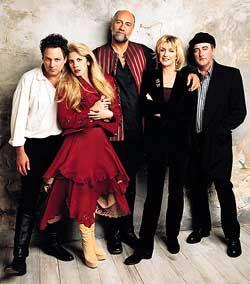
This website/blog. Fantasy baseball. Fleetwood Mac (pictured). 

Pizza. Citizen's Bank Park. The Godfather I & II. 

My 1994 Toyota Camry. The O'Reilly Factor. 

Cable TV series from HBO and Showtime, such as The Sopranos. 

Dinner and a movie with my wife, the Debber. 

The Eagles (both the Philadelphia pro football team and the singing group). 

Books on important topics by conservative authors. The Washington Times and Town Hall websites. 

Veal parmigiana with a side of pasta. A cherry gelati with vanilla ice cream from Rita's.

The sound of Harry Kalas broadcasting a Phillies game on a warm summer evening. The Big Five.

My pillow.

The columns and/or talk radio programs of Ann Coulter, Sean Hannity, Michelle Malkin, Rush Limbaugh and Glenn Beck. 

Seinfeld. My cellphone. St. Lucia. 70's rock and pop music. 

And of course, spending time with my wife Debbie, daughters Christine, Kelly and Melissa, and granddaughter Elysia. 

A slice of pizza from Sam's on the Wildwood NJ boardwalk. My golden retriever Petey. God and country. Jellybeans and salt water taffey. Coca-Cola. 

These are just a few of my favorite things. Pretty eclectic, huh?