
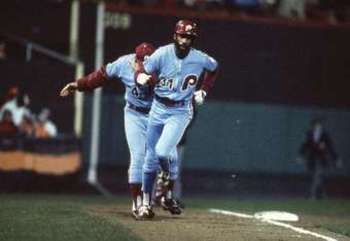
The 1983 season was one of great change for a Philadelphia Phillies organization that had achieved tremendous success over the previous decade.
The Phillies had won the 1980 World Series, four NL East division crowns, and earned a postseason berth in a 1981 campaign split by a work stoppage.
As longtime 1980 World Series-winning stars Mike Schmidt (33), Garry Maddox (32), Steve Carlton (38), Ron Reed (40), and Tug McGraw (38) aged, the team looked to both get younger and continue to contend against tough competition.
Among those already gone was slugger Greg Luzinski, sold to the Chicago White Sox in March of 1981.
Long time shortstop Larry Bowa was traded to the Chicago Cubs in January of 1982 along with an infield prospect named Ryne Sandberg in exchange for shortstop Ivan DeJesus.
A month later, Bake McBride was dealt away to the Cleveland Indians for reliever Sid Monge.
In December of 1982, popular 2nd baseman Manny Trillo was part of a five-player package sent to the Cleveland Indians for young outfielder Von Hayes.
That same month, the club dealt a pair of good arms in Mike Krukow and Mark Davis as part of a package to the San Francisco Giants for veteran 2nd baseman Joe Morgan and reliever Al Holland.
Morgan was 39-years old, and was now reunited with his old Cincinnati buddy Pete Rose, now 42-years old and in his final season of a five-year contract with the Phillies.
The ‘Big Red Machine’ Reunion would be completed when the Phillies signed Tony Perez as a free agent at the end of January 1983.
With the exception of the 24-year old Hayes, every Phillies positional starter was at least 30 years of age, as were three members of the season-opening starting pitching rotation, and the majority of the bullpen.
The club was so long in the tooth that they were given the nickname the “Wheeze Kids”, a nod to the 1950 NL champs who had been so young that they had become the “Whiz Kids” in team lore.


